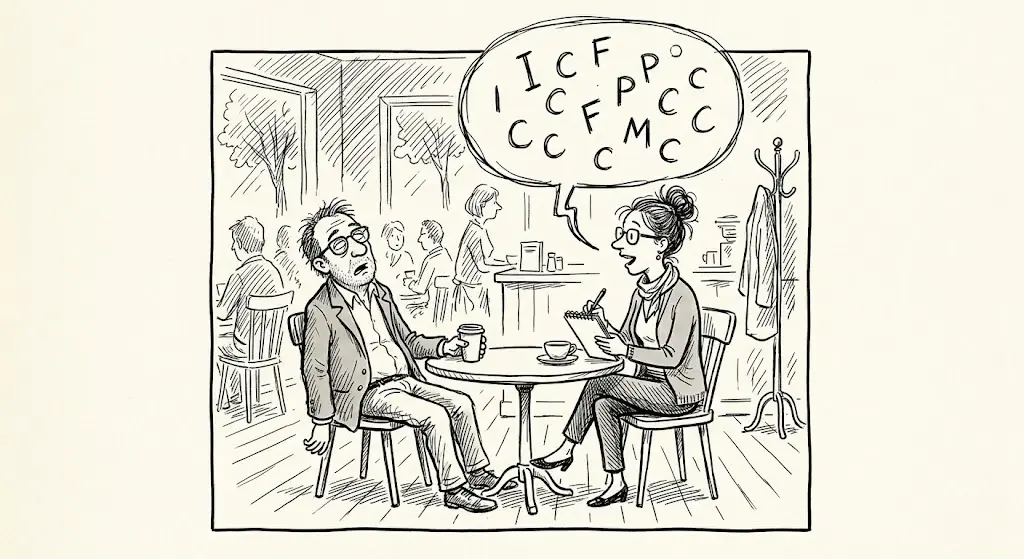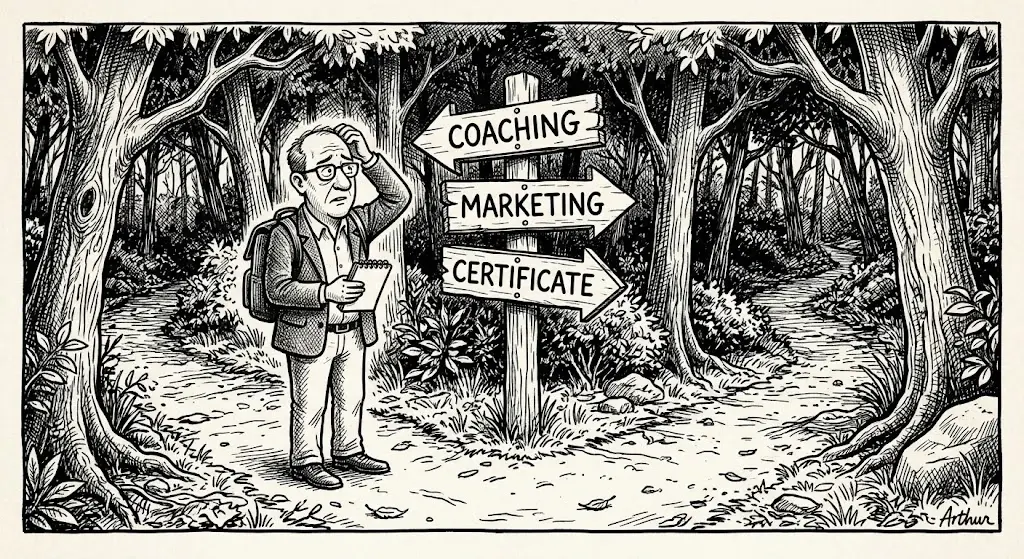

Starting April 1, 2027, ICF is retiring the single recorded coaching session that ACC and PCC candidates on the Portfolio path (the route without an ICF-accredited training program) have submitted for evaluation for years, probably the thing most candidates dread more than the exam itself. That's not a paperwork update, and it's not a response to AI. ICF looked at its own evaluation system and its own data said it wasn't working the way it needed to.
What ICF found wrong with its own system
This is ICF's own language, not a critic's read. Its own announcement says a single recorded session "presents increasing challenges" for measuring coaching competence across languages, cultures, and communication needs, sign language included. And its own survey of mentor coaches backs that up with real numbers: 68% said clients struggle to understand what high-quality mentor coaching should even look and feel like, 54% called the credential application process too complex, 38% said it was too time-consuming.
A body doesn't publish numbers like that about its own flagship evaluation unless it's planning to change something.
What's changing
Starting January 1, 2027, every ACC, PCC, and MCC candidate has to work with a mentor coach who holds a brand-new credential of their own, the Mentor Coach Specialization. Then, starting April 1, 2027, for ACC and PCC candidates on the Portfolio path specifically, the old one-time recorded session goes away, replaced by an ongoing mentor-coaching relationship: at least three months, at least three individual sessions, with the mentor coach documenting what they observe against the credential-level markers. MCC keeps its recorded evaluation. That part isn't changing. And candidates coming through an accredited training program were never on the recorded-evaluation path to begin with, they just need an MCS-credentialed mentor now too.
Trading one recording for months of observed work is a real tightening, not a relaxing. A mentor coach who watches you work over a season and puts their name on what they saw is a harder thing to get past than one good take.
The part I'm not going to skip past
It would be easy to write this whole post around the 2027 changes and stop there, but nobody has proven that holding the credential makes you a better coach, and leaving that out wouldn't be honest.
Coaching outcome research is mature at this point, dozens of randomized trials, real meta-analyses. A 2023 meta-analysis in Frontiers in Psychology says plainly that "very few studies include information about the coach's certification," and names that as a gap in the field. A separate study that tracked real coach-client pairs over two years (published 2023, expanded 2025 in the Journal of Applied Behavioral Science) found that coach training models were "identified through subjective means, such as opinion surveys, rather than empirical research linking specific competencies to coaching outcomes." What that same study found predicts whether a client's behavior changes: the quality of the working relationship, empathy, emotional self-control, adaptability, industry knowledge. None of that is what a credentialing exam or a recorded evaluation measures.
The research doesn't say whether holding a credential makes you a better coach, and I'd rather say so than pretend it's settled.
Why it matters more anyway
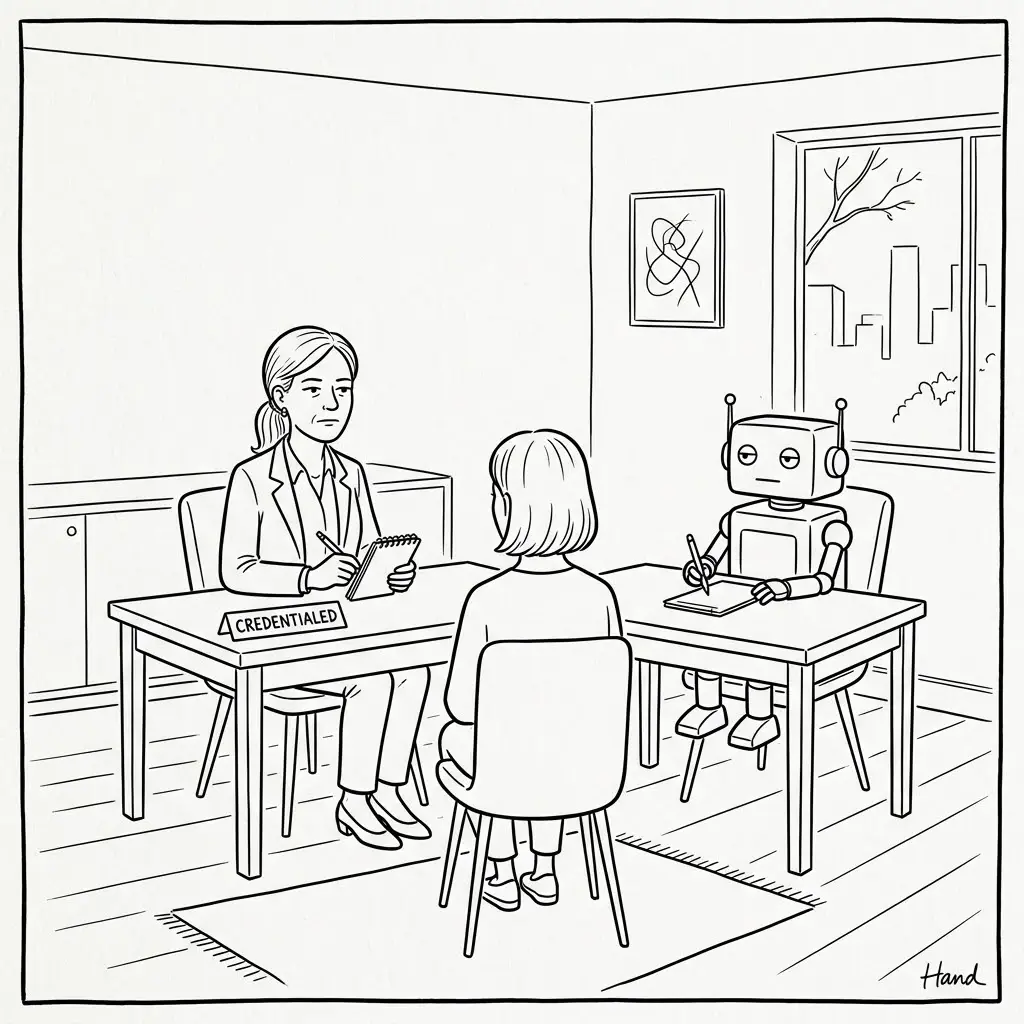
Here's where the market and the research disagree, and the market is the thing that decides whether this is worth your time and money. ICF's own 2025 study puts a number on it: credentialed coaches earn about $10,000 a year more on average than coaches without one, coaching-association members earn $14,000 more, and 73% of coaches say clients and organizations increasingly expect the credential. None of that proves quality. It proves demand, and demand is what pays your invoices.
That demand is concentrated somewhere specific: employer-sponsored coaching platforms, not individual clients Googling around for someone to talk to. Torch, CoachHub, and Sounding Board all publish an ICF credential as a hard requirement just to join their coach networks, before a company ever picks anyone off the roster. A company buying coaching at scale wants a credential to screen by, and that screen is about to get harder to pass right as the low end of coaching, the habit reminders, the basic check-ins, the stuff nobody was paying a premium for anyway, starts getting handled by AI instead. BetterUp, one of the larger enterprise coaching platforms, launched a real AI coaching product in January 2025, built on two acquisitions: one doing skills-specific AI coaching, one building AI tools to support human coaches rather than replace them. AI is well suited to that lower tier. It's not well suited, not yet, to sitting with someone through a genuine organizational mess or building trust over a year, and the buyers spending the most money still want a credentialed person for that part.
Put those two things next to each other and you get one mechanism, not two separate trends that happen to line up: the credential is already the strongest signal the market has, even without outcome proof behind it, and it's about to be a harder signal to get. A market that already pays a premium for a scarce signal tends to keep paying more for it once that signal gets scarcer, not less.
What I'm not claiming
I'm not saying coaching is getting regulated the way therapy or counseling is licensed. It isn't, not in the US, not anywhere I found evidence of it happening. This is the field raising its own bar on its own initiative, not outside legislation forcing anyone's hand. And I'm not saying the credential makes you a good coach. I can't say that. What I can say is narrower: the signal is tightening and the price on it is going up, at the same time.
What I'd do with this
If you've been treating the credential as optional, something to get to eventually, the ground under that decision is moving before 2027 changes the terms. Not because anyone's forcing your hand. Because the bar is going up right as the market leans on this signal harder than it used to.
CredentialPrep's practice questions cover the current PCC/MCC format now, and I'll be updating it as the 2027 changes land.