
Heads up: This post describes the current PCC/MCC exam. A new PCC-MCC Exam launches November 10, 2026 with a different format: 80 questions in 150 minutes, and a new knowledge-based multiple-choice section. If your exam date is on or after that, see The New PCC-MCC Exam for what's changing.
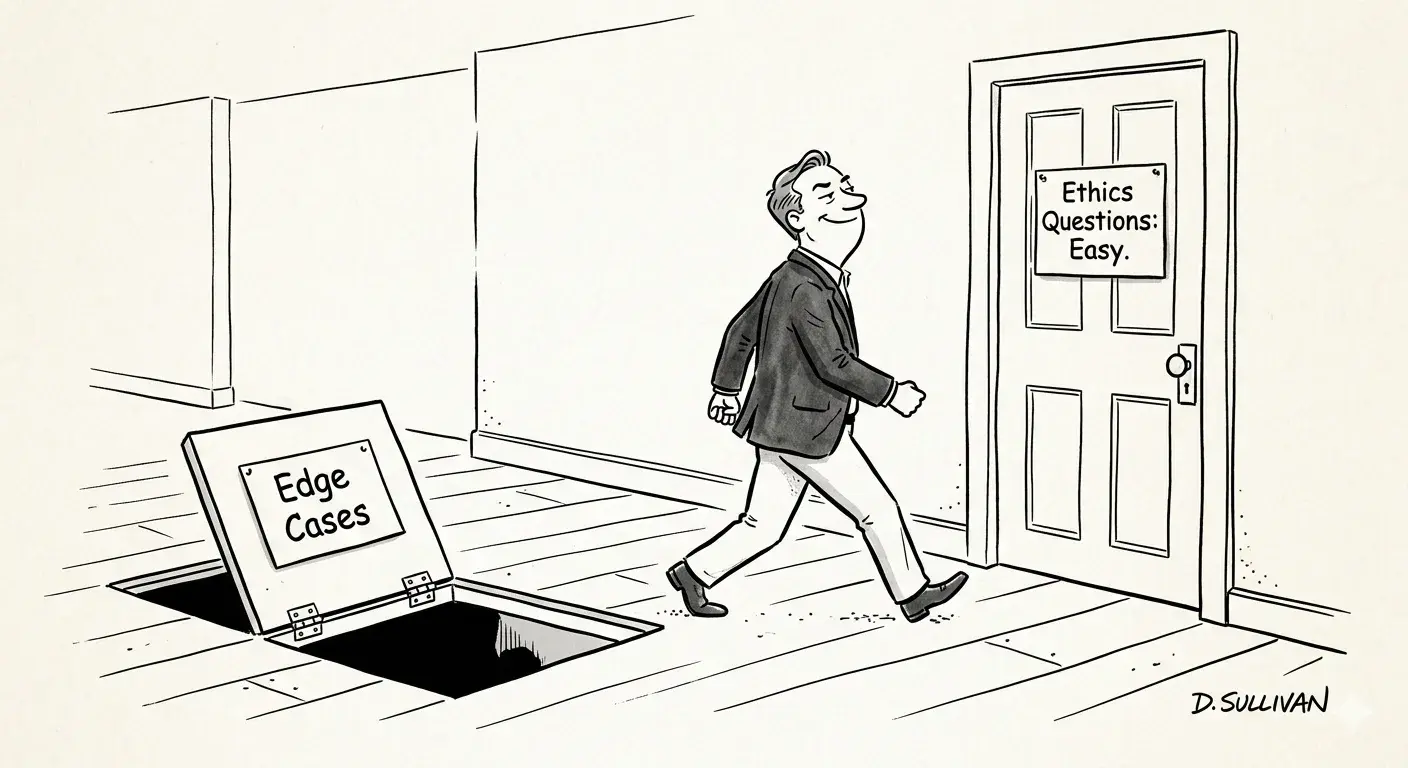
When coaches describe what they're least worried about on the ICF credentialing exam, ethics questions come up often. The Code of Ethics is published. You can read it. It covers conflicts of interest, confidentiality, dual relationships, referrals outside coaching scope. It does not feel like a black box the way the competency framework sometimes does.
I thought this too, and then I started working through ethics-adjacent practice questions and started getting them wrong in interesting ways.
Here is what I've noticed.
The easy ethics question is not what the exam tests
The version of an ethics question that feels easy goes something like this: a coach discovers that a client is the coach's neighbor. What should the coach do?
If you know the Code of Ethics, you recognize this as a potential dual relationship issue. You know the coach needs to consider whether this relationship affects their objectivity, disclose it, and potentially refer out if the relationship creates a conflict. That is a knowledge recall question dressed as a scenario question, and it does not capture how ethics shows up on the actual exam.
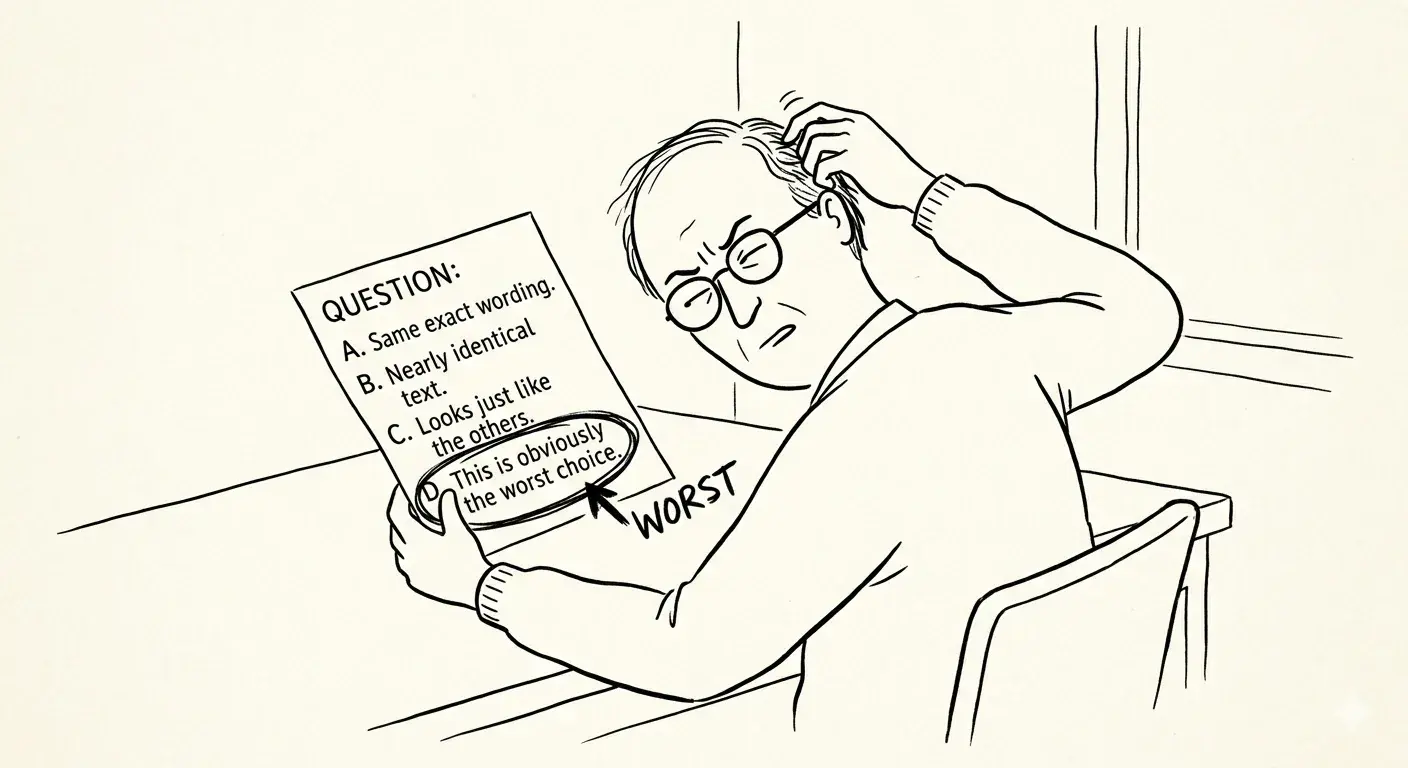
The exam version of an ethics question puts you in a moment where two things the Code of Ethics supports are in tension with each other. Or it presents a scenario where the professionally cautious response and the ethically required response look slightly different. The broader challenge of identifying which answer is worst when multiple options look defensible is something I explore in The Worst Answer Problem.
Consider: a coaching client discloses something that might indicate a risk to themselves. The coach is not a therapist. The Code doesn't hand you a referral checklist for this moment. What it gives you is a confidentiality standard: a coach needs a clear agreement with the client, made up front, about what gets disclosed to others when there's an imminent or likely risk of danger to self or others. Whether this specific disclosure crosses that line is a judgment call, and the exam will ask you to make it, in a specific scenario with specific details.
That is not a recall question. That is a judgment call about where a boundary sits in a real situation. And the exam is designed to make the wrong call look reasonable.
Aspirational values versus enforceable standards
I used to assume the Code marked its enforceable rules with "must" and its softer guidance with "should." It doesn't. Go read it: every provision in Part 4, the actual Ethical Standards for ICF Professionals, is written the same way. "As an ICF Professional, I..." No must, no should, just a flat first-person statement, numbered.
The line sits somewhere else entirely. Part 2 of the Code, the Core Values and Ethical Principles, is explicitly aspirational. The document says so in plain terms: those values are "a robust guide for ethical reasoning and decision-making," not obligations with teeth. Part 4 is different. Those are the standards ICF can hold a coach accountable to through its Ethical Conduct Review process, with real consequences on the table: mandatory education, mentoring, supervision, or loss of the credential.
So the exam-relevant question isn't "does this sentence sound mandatory." It's "which part of the Code is this testing." A scenario about living up to a core value, humility, self-awareness, cultural sensitivity, is testing something aspirational. A scenario about confidentiality, conflicts of interest, or professional boundaries is testing an enforceable standard with a specific number attached in Part 4. Knowing which one you're in tells you how much weight the violation carries.
The inverse error is also common: treating an enforceable standard as optional because it's phrased in that same plain, first-person voice instead of sounding forceful. Confidentiality exceptions are the clearest example. Standard 2.3 requires a clear agreement with everyone involved about what confidential information might need disclosing: illegal activity, a legal requirement, a court order, or imminent risk of danger to self or others. The exam will test whether you apply that exception in the right scenarios, and hold back from applying it in the ones that just feel serious but don't meet the standard.
The professional boundaries question
The edge case that comes up repeatedly in community discussions among exam takers involves scope of practice. Coaches regularly encounter clients who are describing something that sits on or near the line between coaching content and clinical content. Depression, anxiety, grief, relationship breakdown, sometimes thoughts that raise concern.
The Code doesn't spell out a bright line for when a coach needs to step back from clinical territory. What it does say, in Standard 4.2, is that a coach who recognizes a personal limitation or circumstance that could impair their coaching, including something outside their training, has to seek support, including relevant professional guidance, and consider suspending or ending the engagement if that's what it takes. That's a real, enforceable standard, but it puts the call on the coach's own judgment, not a checklist. The exam will test whether that judgment is calibrated correctly.
The worst answer in these scenarios tends to be the one that crosses the scope line by engaging with the clinical content as if it were coaching content. The second-worst tends to be the one that handles the situation in a way that is too abrupt or that prioritizes the coach's comfort over the client's needs.
The best answer is usually the one that stays in contact with the client, acknowledges what is being shared, and opens a conversation about additional support without abandoning the coaching relationship or pretending the disclosure did not happen.
What to do with this in prep
A few things have helped me approach ethics questions differently:
Read the ICF Code of Ethics carefully, not just once, but more than once with the exam in mind. Pay attention to which part you're in: Part 2's core values are the aspirational backdrop, Part 4's numbered standards are what ICF can hold a coach accountable to. The distinction is load-bearing.
When you encounter an ethics practice question, ask not just "what should the coach do" but "what does the Code of Ethics specifically require or prohibit here." There is often a gap between those two questions.
Treat scope-of-practice scenarios as requiring a two-part answer: what does the client need, and what is the coach's role in meeting it. The answer is usually not either/or. It is often "stay connected and introduce the idea of additional support."
And do not assume that because you have read the Code of Ethics, you have practiced applying it. The practice is the part that catches the edge cases. CredentialPrep's PCC bank has an ethics filter specifically so you can drill those scenarios separately, which is worth doing before the exam. For a broader look at how to pace yourself and handle the two-answer format on exam day, Exam Strategy for the Day You Sit It covers the full approach.
If you want to start getting reps in on ethics scenarios before you go back to the full bank, you can start with 10 free questions right now, no card required: try it here