
Heads up: This post describes the current PCC/MCC exam. A new PCC-MCC Exam launches November 10, 2026 with a different format: 80 questions in 150 minutes, and a new knowledge-based multiple-choice section. If your exam date is on or after that, see The New PCC-MCC Exam for what's changing.
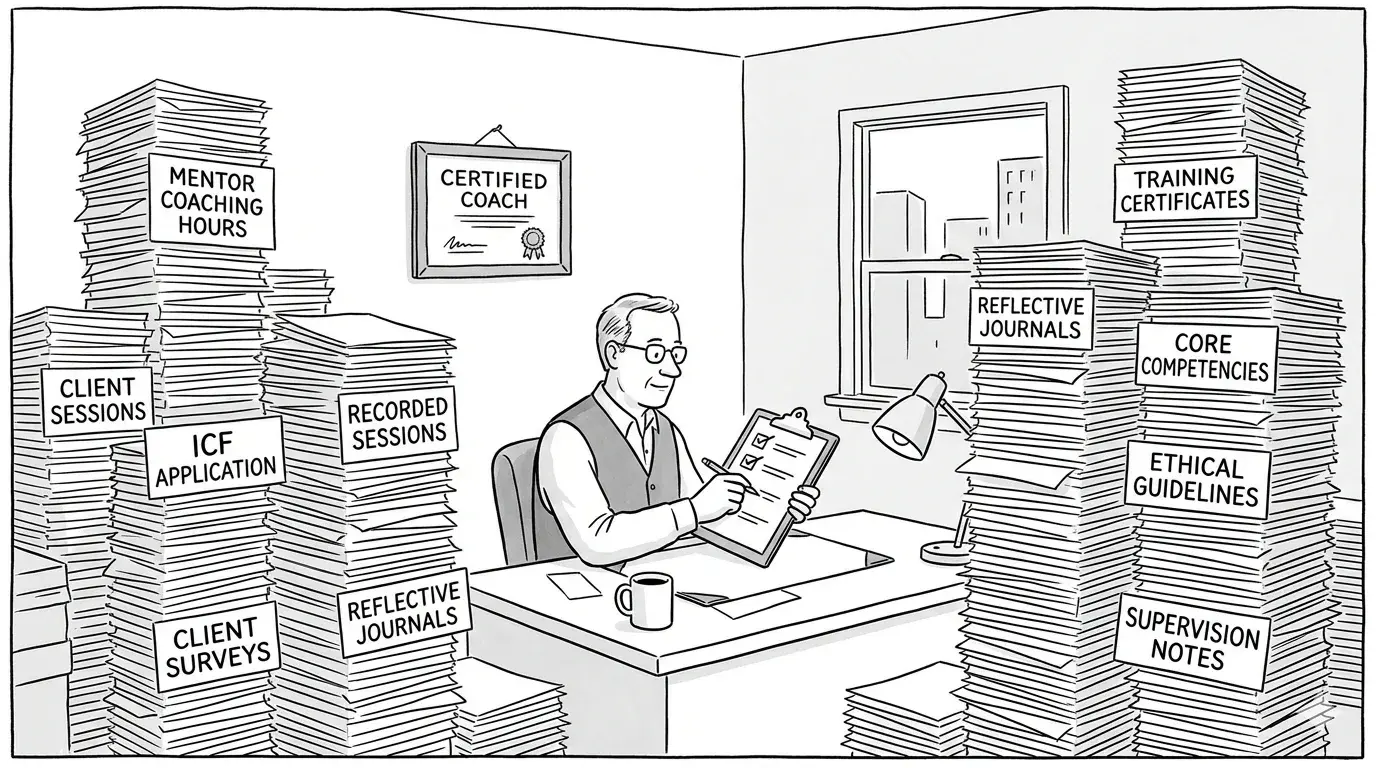
The PCC credential is where most serious coaches are aiming. It's the credential that signals sustained, professional-level practice: enough hours, enough supervision, enough demonstrated skill to have earned a meaningful benchmark. It's also the credential that takes long enough to earn that it's worth knowing exactly what's required before you start logging hours.
TL;DR
- 125 hours of coaching-specific training from an ICF-accredited program.
- 500 coaching hours, of which 450 paid, across at least 25 separate clients.
- 10 hours of mentor coaching (3 individual minimum) within the 18 months before applying.
- A recorded coaching session scored against the ICF PCC Markers.
- The written exam: 78 scenarios in 3 hours, best-and-worst format. The piece most candidates underestimate.
Here is a current breakdown of the requirements, based on ICF's published standards. Check coachingfederation.org for any updates, since ICF periodically revises these.
Coaching-specific training: 125 hours
You need 125 hours of coaching-specific education from an ICF-accredited program. "ICF-accredited" means the program holds one of these designations: ACTP (Accredited Coach Training Program), ACSTH (Approved Coach Specific Training Hours), or the more recent ACTP-equivalent program designations that replaced those.
If your program only partially qualifies or you're combining credits from multiple programs, the documentation gets more complicated. ICF's portal walks through what's acceptable. The short version: the 125 hours need to come from ICF-recognized sources, and they need to be coaching-specific, not general training.
Coach training that doesn't come from an accredited program doesn't count toward this number. Neither does mentoring, supervision, or workshop hours that aren't part of a formal program. A lot of coaches don't discover this gap until they're applying, which is not a good moment to find out.
Coaching experience: 500 hours, 25 clients
Before applying, you need at least 500 hours of coaching experience after the start of your coach-specific training. Of those 500 hours:
- At least 450 need to be paid hours (paid includes pro bono, which ICF defines specifically, so worth checking)
- At least 25 separate clients
The client count is the one that sometimes surprises people. You can have 500 hours with 10 clients. That doesn't qualify. You need breadth of practice, not just depth with a few long-term clients.
The hours are logged through ICF's online portal and are self-reported with documentation available upon request. ICF doesn't audit every application, but falsifying hours is an ethics violation.
Mentor coaching: 10 hours
You need 10 hours of mentor coaching from someone who holds an ICF credential at the PCC or MCC level. Of those 10 hours, at least 3 need to be individual (one-on-one with the mentor, focused on your coaching). The remaining 7 can be in a group format.
The mentor coaching hours need to have occurred within the 18 months before your application. If you did mentor coaching years ago, it doesn't count unless it falls in that window.
Mentor coaching is distinct from supervision (someone reviewing your cases) and from therapy or personal coaching. The focus is your coaching skills, reviewed through your actual work. The mentor observes or reviews sessions and gives feedback on specific behaviors.
For most coaches, this is one of the most valuable parts of the process and also one of the parts that gets deferred the longest. Finding a good mentor who holds PCC or MCC and whose feedback is genuinely calibrated to the markers takes some effort.
Performance evaluation: a recorded session
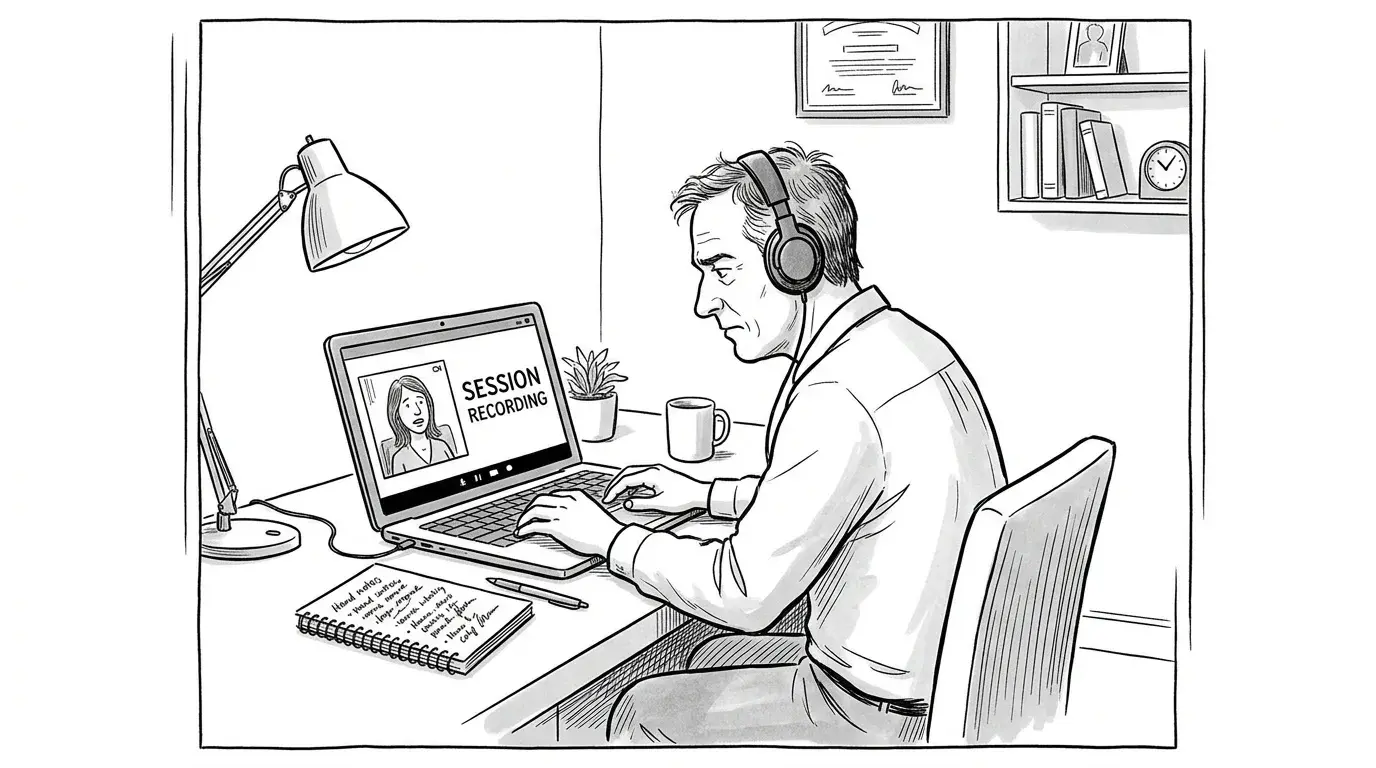
Your application requires documentation of performance evaluation. For PCC candidates, this typically means a recorded coaching session evaluated by a trained assessor.
What the assessor is looking at: the ICF PCC Markers, which are the specific, observable behaviors that define coaching at the PCC level. Each marker maps to one of the eight core competencies.
The session needs to be a real coaching session with a paying client or a pro bono client, recorded with consent. You submit either a recording or a transcript depending on the pathway.
Preparing for this evaluation is its own discipline. The markers are public, which means you can study them and score your own sessions before submitting. Most coaches who prepare seriously spend time reviewing transcripts against the markers and fixing what they find before they ever send anything in. If you're not doing that, you're going in less prepared than you could be. For a detailed guide on what assessors are actually checking and how to use your own recordings to prepare, The ICF Performance Evaluation Guide covers the whole submission process.
The written credentialing exam
The ICF Credentialing Exam is required for the PCC credential. It's a scenario-based exam that tests your ability to identify coaching behavior that aligns with the ICF framework.
For PCC and MCC candidates: 78 scenario-based questions, each asking you to identify the best AND worst response from four options. You have 3 hours. Scoring is on a 200-600 scale, with 460 as the passing mark.
The exam runs through Pearson VUE, either at a testing center or online with a remote proctor. ICF provides a small number of official sample questions (8 for PCC/MCC level), which is almost nothing to prepare with. Most candidates end up using third-party practice resources.
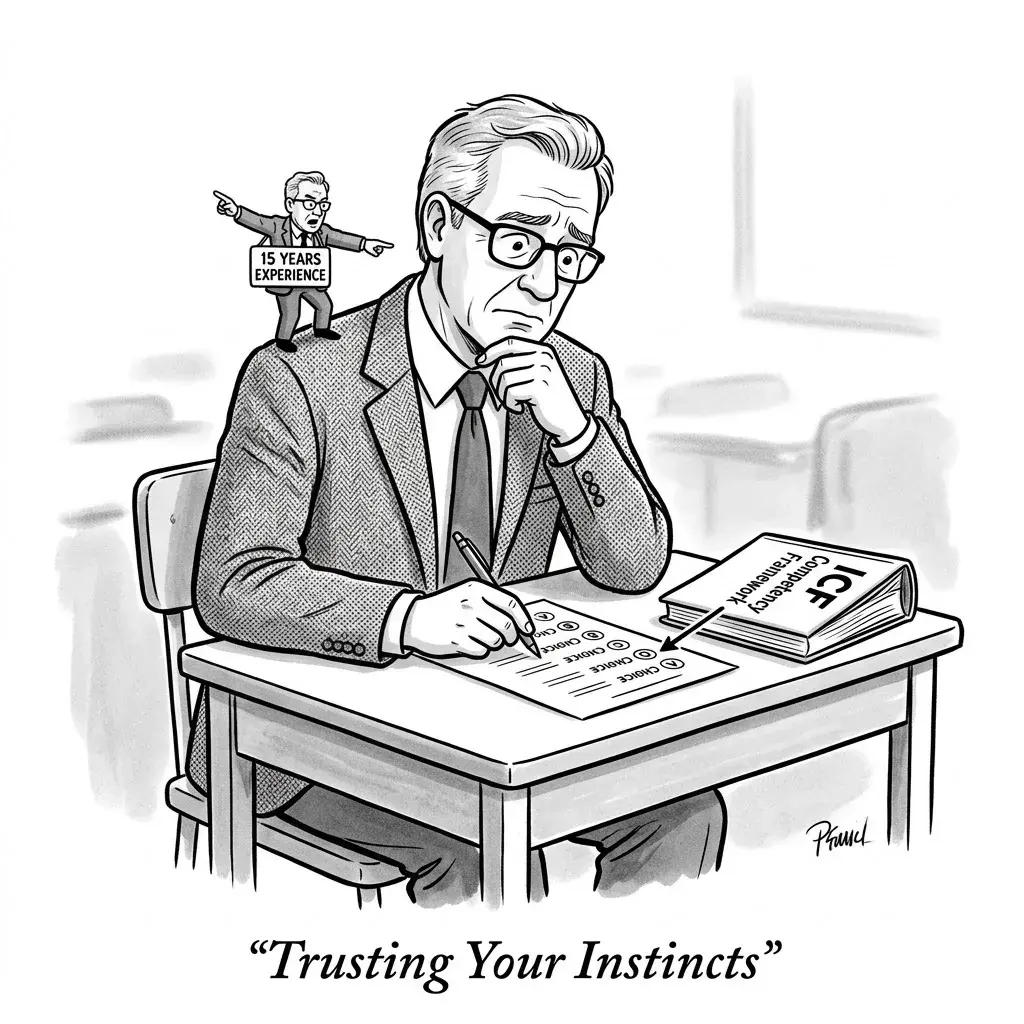
The exam is harder than it looks. The best-and-worst format means you're making two judgment calls per question, and the distractors are designed to catch candidates who are applying practical coaching experience rather than the specific ICF frame. Coaches with years of real-world practice still struggle with it, because the exam-correct answer is often one beat sparser, one beat more client-led than what an experienced coach might do in a session. If you want to understand the format and the specific thinking patterns it's designed to catch, What the ICF Credentialing Exam Really Tests covers both in detail.
Two things to know before you apply
The requirements don't expire once you've met them, but they're verified at application time. If something doesn't qualify, ICF will tell you and your application will be incomplete. Double-check your training documentation before you apply.
The exam is the part most people underestimate. The training hours, coaching hours, and mentor coaching are logistics problems. You know what you have, and you either have enough or you don't. The exam requires a specific kind of preparation that many coaches don't do until they're sitting with it and realizing their instincts keep pointing them toward wrong answers.
Where CredentialPrep comes in
The two parts of the PCC application that require the most active preparation are the performance evaluation and the written exam. Those are the two things CredentialPrep is built for.
The exam practice section has 202 vetted PCC/MCC-format (best-and-worst) questions, with full explanations for every answer. The transcript evaluation feature scores your coaching sessions against the ICF competency markers so you can see where your recording would demonstrate markers and where it wouldn't.
I'm an ICF PCC currently preparing my MCC application. I built this because I needed both of those things and what existed wasn't good enough.
You can start with 10 free questions right now, no card required: try it here.