When I submitted my MCC performance evaluations in April 2026, one of the things I had to have ready was a complete log of my coaching hours. Not an approximation. Not a rough sense of how many clients I had worked with. A defensible, organized record that could be audited if ICF asked for it.
That documentation requirement is one coaches tend to underestimate until they are staring down an application deadline.
What ICF requires at each credential level
The hour thresholds by credential:
- ACC (Associate Certified Coach): 100 coaching hours, with at least 75 paid. Minimum 8 clients.
- PCC (Professional Certified Coach): 500 coaching hours, with at least 450 paid. Minimum 25 clients.
- MCC (Master Certified Coach): 2,500 coaching hours, with at least 2,250 paid. Minimum 35 clients.
A few things worth flagging before you start counting:
The paid vs. pro-bono split matters. ICF does define what qualifies as pro-bono coaching, and it is narrower than most coaches assume. Check the current definitions at coachingfederation.org rather than assuming your interpretation is correct.
The client count is a separate gate, not just a side effect of the hours. You can log 500 hours across 15 clients and still not qualify for PCC. Breadth of practice is a distinct requirement.
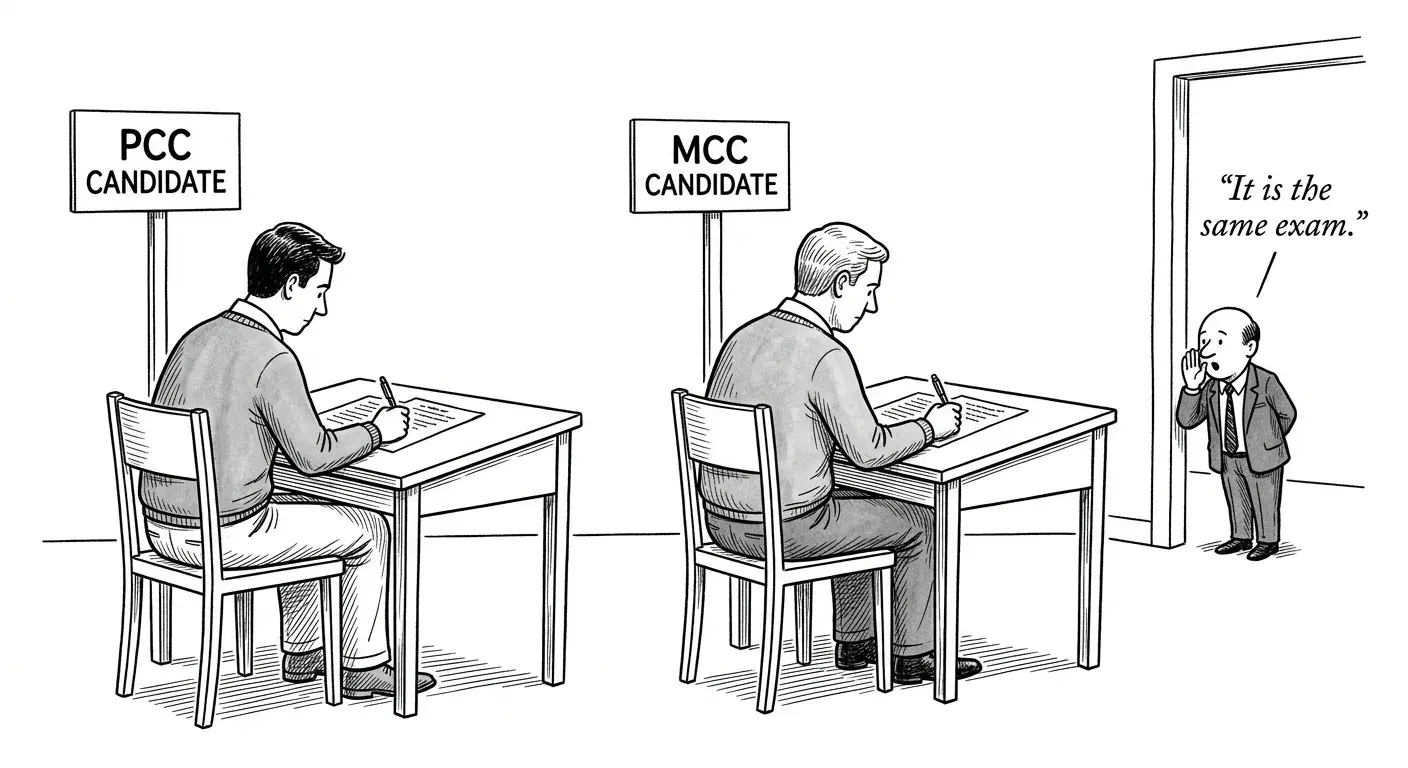
Hours must come after the start of your coach-specific training. Hours you logged before you started your ICF-accredited program do not count. For a side-by-side comparison of how ACC, PCC, and MCC requirements differ beyond just the hours, ACC vs PCC vs MCC: What Really Differs covers what changes between the levels once you get past the paperwork.
ICF logs hours through their member portal via self-reporting. The documentation is available upon request and audited at ICF's discretion. Inflating or misrepresenting hours is an ethics violation with real consequences.
Why coaches lose track
The credential path from entry-level training to PCC takes most coaches three to five years. MCC takes significantly longer. Over that kind of timeline, the tracking approaches people start with tend to break down.
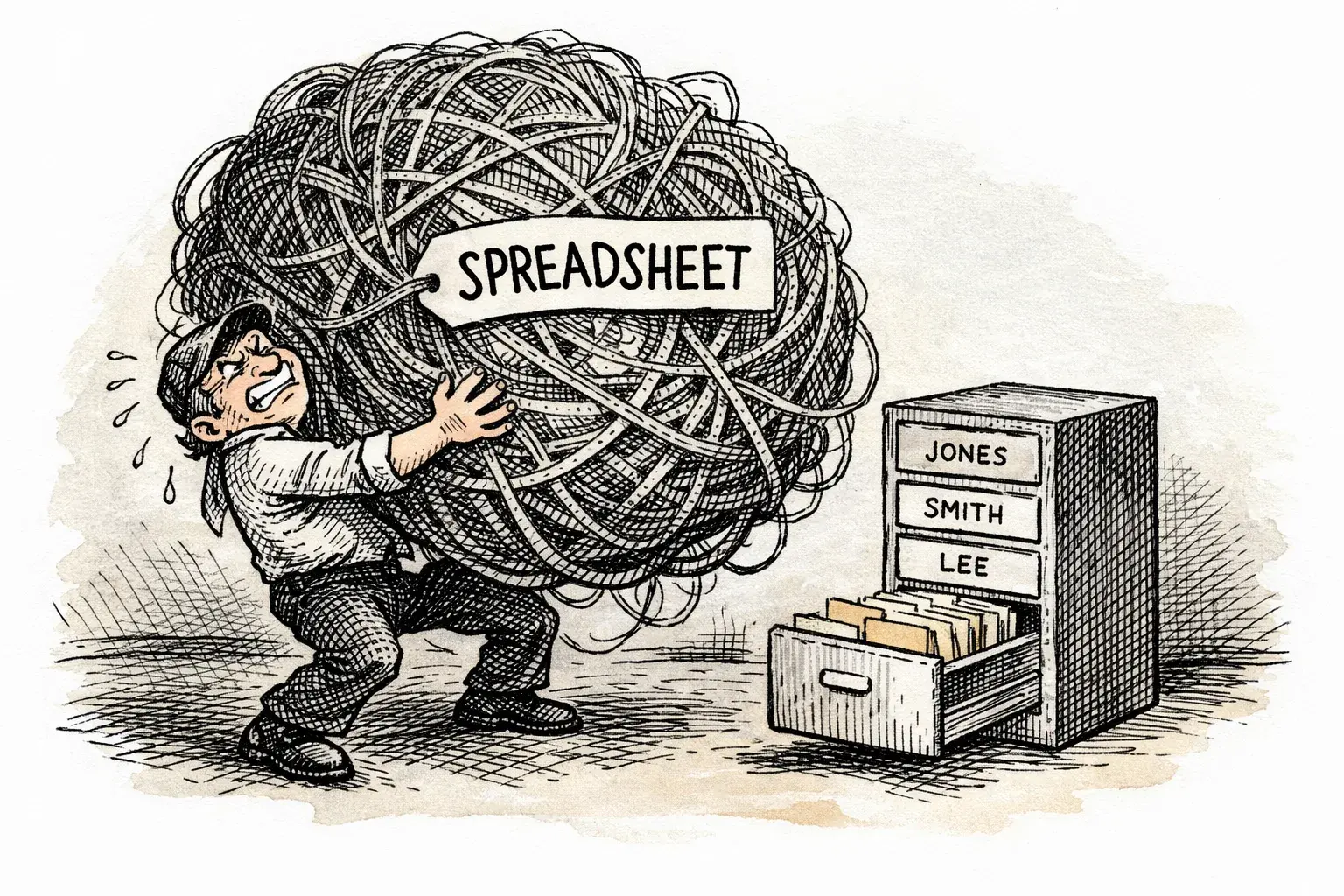
Spreadsheets: A spreadsheet is fine when you have 20 clients. By the time you have 80 clients across three years, sessions logged in different tabs, columns that changed meaning halfway through, and a growing sense that the "paid/pro-bono" distinction was applied inconsistently in year one, it is no longer a source of truth. It is a liability.
Client notes or CRM systems: Practice management tools are built for scheduling and billing, not for ICF-specific reporting. They do not track coaching hours in the format ICF needs. You can have a fully documented client history and still not have a usable coaching log.
Memory: I have spoken with coaches who are confident they have "well over 500 hours" and discover, when they sit down to count, that they are short, or that a significant chunk of their hours do not qualify the way they assumed. Memory compresses. Memory adjusts. Memory is not documentation.
The pattern I see: coaches start keeping records with the intention of cleaning them up later. Later becomes never. By the time they are preparing an application, they are reconstructing history instead of reporting it.
What a working tracking system needs
Each client needs a unique record: name or pseudonym, whether they are an individual or part of a group engagement, and their current status. Each session needs a date, duration, the client it was with, whether it was paid or pro-bono, and the session type (individual, group, internal). Notes are optional but useful when you are trying to reconstruct context a year later.
Beyond the per-session data, you need running totals you can check at any point. Total hours, paid hours, unique client count. Not when you apply. Now. If you are tracking toward PCC and you do not know today how many hours you have, the system is not working.
The system also needs to be exportable. ICF's portal asks for totals, and documentation may be requested. A log you cannot get out of a proprietary format is a problem at the worst possible time.
The last requirement is the hardest one to design for: you have to use it. A technically complete system you abandon after six months is worse than a simple one you maintain. Logging a session should take about as long as writing a one-line calendar entry.
Where group coaching fits in
Group coaching hours count, but they count differently. Check the current ICF rules at coachingfederation.org for the exact formula, as this has been updated over the years. The general principle is that one hour of facilitating a group session does not equal one hour per participant. Log group sessions separately from individual sessions so you can apply the right calculation at application time.
On internal coaching
If you coach employees as part of your job, those sessions may qualify under certain conditions. Internal coaching can count, but the hours need to come from your role as a coach rather than as a manager or supervisor, and you document them the same way you document paid client work. Verify the current criteria at coachingfederation.org before logging anything this way, since the rules have been updated.
My own experience
I started tracking seriously once I knew I was pursuing PCC. Before that, I had a rough sense of my volume but not a reliable record.
When I started organizing the documentation for PCC, I had to go back through invoices, calendar records, and email threads to reconstruct sessions I had not logged properly. That took longer than any part of the actual application. I built better habits after that, which is why the MCC documentation was substantially less painful.
By the time I submitted my MCC performance evaluations, I had records going back years, organized by client, with paid/pro-bono clearly labeled, and running totals I could check against the requirements at any point. That is not because I am especially organized. It is because I set up a system that made logging a session take about 30 seconds, and I used it.
The tool I use now is the coaching log inside CredentialPrep, which is free and built specifically for ICF tracking. You can find it at credentialprep.co/app#log. It handles the client records, the session type categories, and the exportable totals that the ICF portal needs.
What happens if you skip this
If you apply for PCC or MCC and your documentation is incomplete, ICF will ask for more information or flag your application as incomplete. The process pauses. You resubmit. The timeline extends.
The more significant risk is discovering a gap late. If you have been coaching for four years assuming you are tracking toward PCC, and you sit down to apply and realize 80 hours of your sessions were logged ambiguously enough that you cannot confidently classify them as paid, you have a problem. Not a catastrophic one. But a frustrating one that could have been avoided. For a complete picture of every requirement you need to meet for PCC, ICF PCC Requirements: The Complete Breakdown covers each piece from training hours to the written exam.
The hours are a logistics problem with a clean solution. Set up a system that takes less time than writing a session note, use it from the first client, and by the time you are ready to apply the documentation work is already done.
While you're building your tracking system, the exam side of prep doesn't have to wait. You can start with 10 free questions right now, no card required: try it here.